
Production Work Shop
A switching power supply is produced on a typical electronics manufacturing assembly line. It starts with a circuit board, goes through automatic insertion, surface mounting, manual insertion, soldering in a wave soldering machine, post-soldering, assembly, and packaging processes, and is finally delivered to the user.
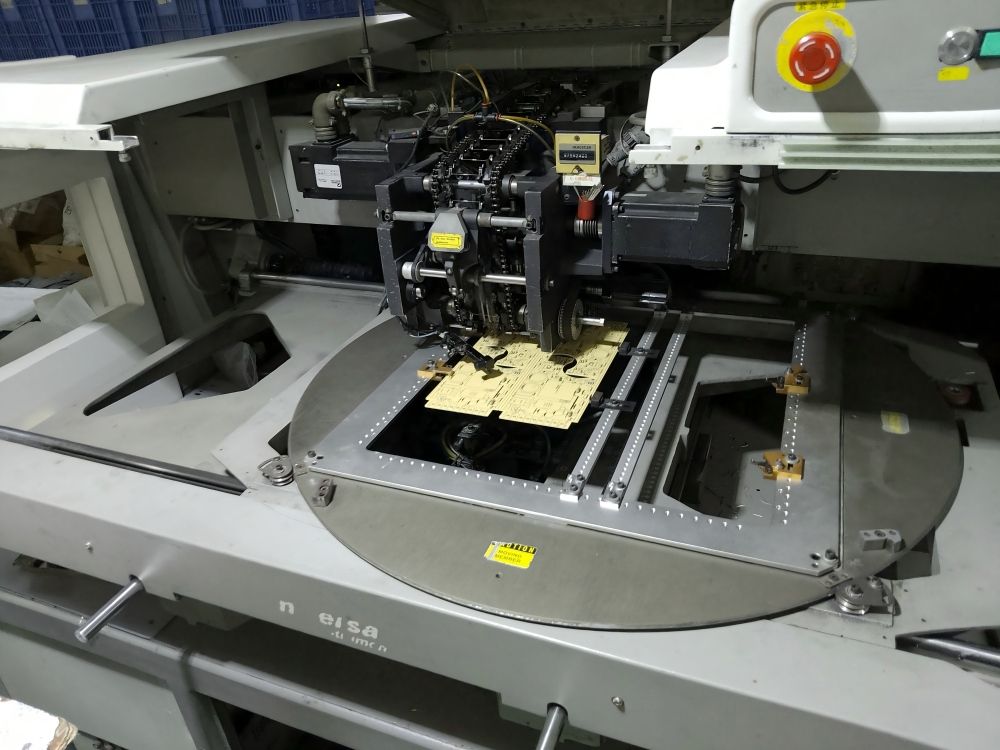
Automatic Plugin (AI)
A switching power supply is produced on a typical electronics manufacturing assembly line. It starts with a circuit board, goes through automatic insertion, surface mounting, manual insertion, soldering in a wave soldering machine, post-soldering, assembly, and packaging processes, and is finally delivered to the user.
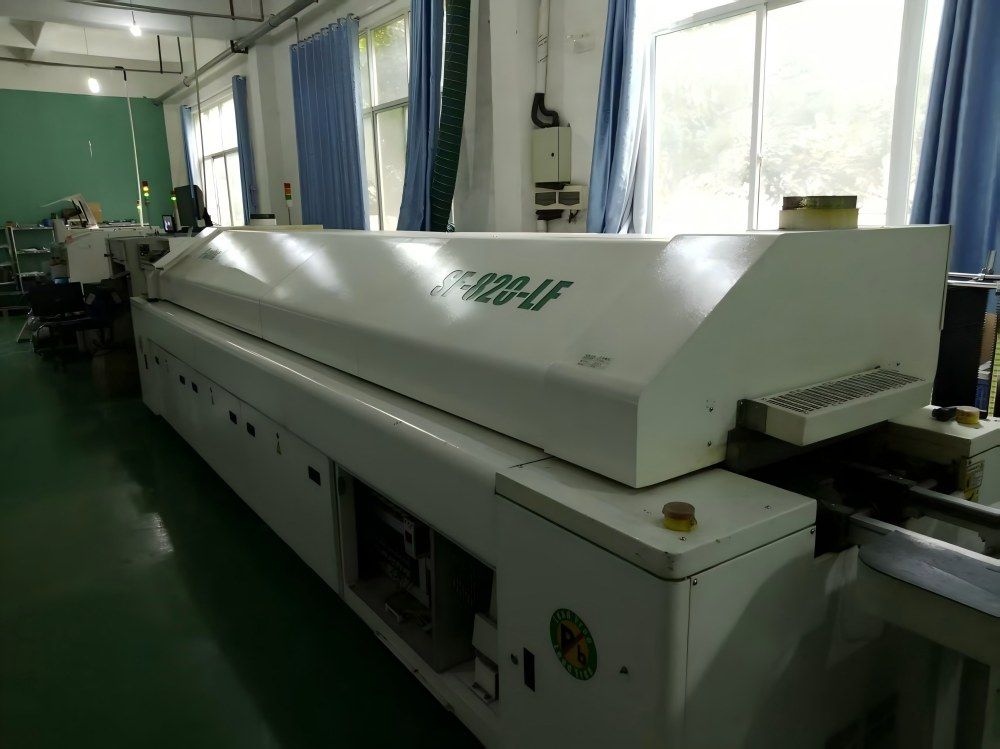
Surface Mounted Technology line
Surface Mount Technology (SMT) has become the mainstream process in the electronics assembly industry, and the pick-and-place machine is a key piece of equipment in this technology system. It has replaced traditional manual soldering and through-hole processes, quickly and accurately placing tiny surface-mount components onto the corresponding positions on a PCB with printed solder paste, either fully automatically or semi-automatically. This process not only greatly improves production efficiency but also enables the development of electronic products toward being lighter, thinner, shorter, and smaller. Compared to through-hole components, surface-mount components are smaller and occupy less space.
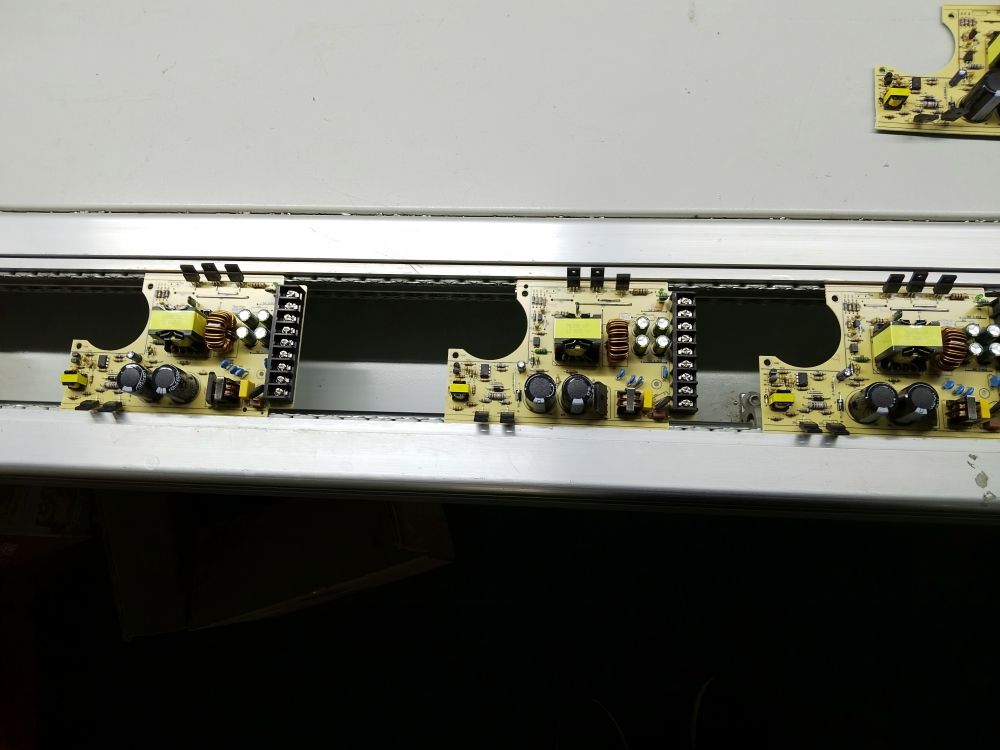
Manual Insert Line
Not all components can be handled by AI or SMT; some special components still need to be manually inserted. Workers sit around the assembly line, manually placing each component onto the circuit board.
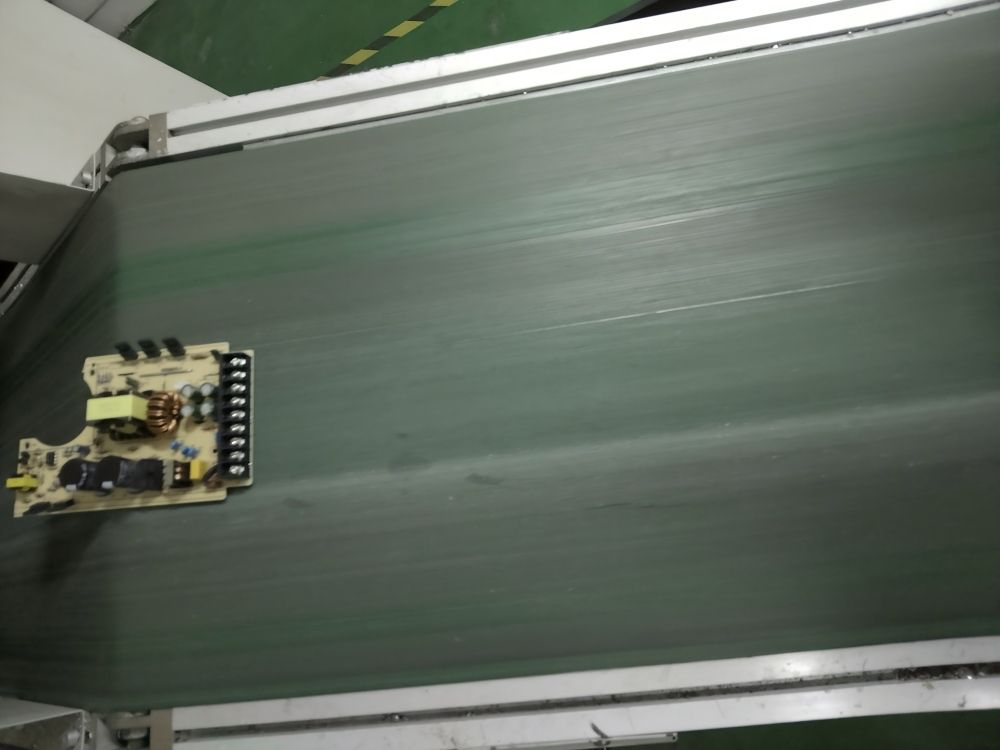
Wave Soldering
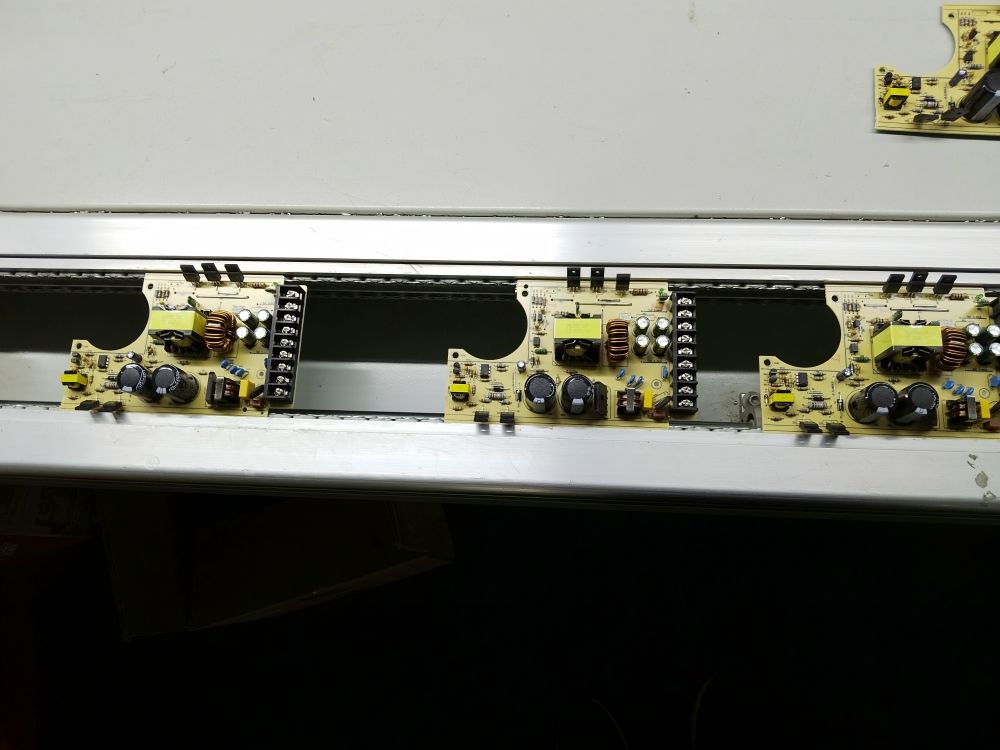
After the circuit board has been soldered, it is populated with various electronic components at this stage. We refer to this as a semi-finished product, which already has all the functions of a power supply.
Assemble Line
The process of putting a casing onto the semi-finished product is called assembly. The commonly mentioned \"factory screw-tightening\" work takes place during this process. Our assembly is also completed on a production line.